
Bedroom
10 Ideas for Bedroom Color Design
Feb 24, 2022 · 2 min read
Why Should You Pay Attention To Your Bedroom Color Design?
Colors influence our perceptions and emotions. While bedrooms and bathrooms offer privacy, people spend considerably more time in bedrooms. The article emphasizes that "color psychology" matters, noting a strong connection between color representation and perception. Red associates with anger, violence, and love, while green connects to wealth, nature, and harmony. Colors affect both emotional responses and practical light levels in rooms.
10 Ideas for Bedroom Color Design
The article presents bedroom color schemes as critical to comfort and sleep quality. It suggests consulting design professionals for comprehensive guidance.
1) Indigo Blue and White Bedrooms — Indigo represents wisdom and internal thoughts; white symbolizes calmness and purity. Both are light colors that reflect adequate light, brightening spaces.
2) Bubble Gum — Described as "a mid-tone pure pink color," this aesthetic suits those who are "sweet, caring, and generally somewhat childish or romantic." Good natural lighting enhances this shade.
3) Peach — This toned-down shade containing yellow, orange, and pink creates calming effects and pairs well with other colors. It offers feminine aesthetics without excessive boldness and combines effectively with cooler tones like blue, green, and purple.
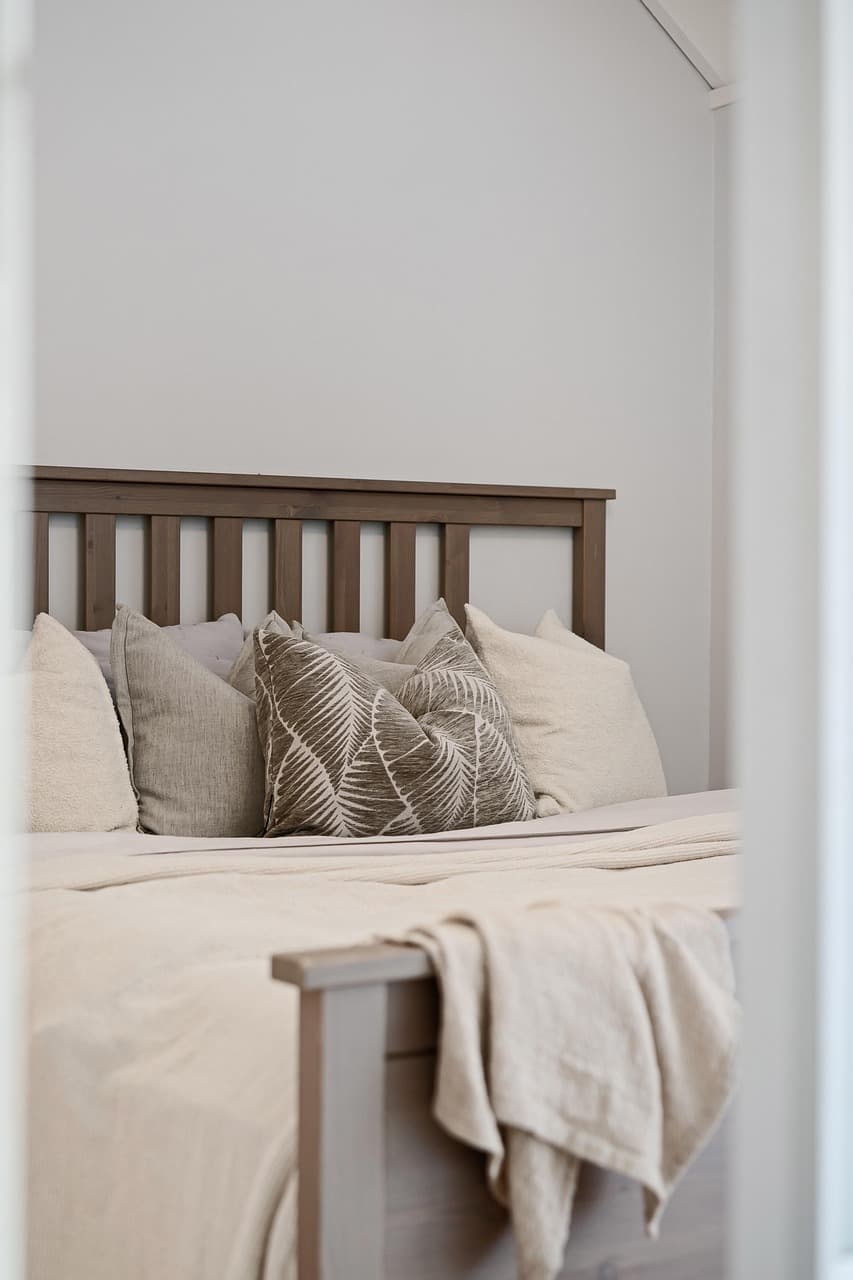
4) Brown and Cream/Beige — Brown provides peaceful, calm qualities without depression. Combining it with lighter variants like beige and cream creates rustic comfort without expensive furniture. This pairing works best in naturally bright bedrooms.
5) Shades of Grey — Grey sits between white and black, representing balance. Multiple shade options allow customization—darker shades create cooler, calming effects, while lighter shades provide vibrancy. This color coordinates perfectly with modern furniture.
6) Shades of Purple — Purple symbolizes mystery, success, and royalty. Its versatility allows both bright and moody applications. Combining dark and bright purple shades creates contrast and comfort.
7) Mint Green — This bright, nature-connected color appears frequently in traditional Nepali homes. It maintains subtlety while adding personality. Pairing it with bright ceilings and mildly dark floors works effectively.
8) Sky Blue — This shade offers distinct personality while maintaining blue's calm aesthetic. It combines well with darker shades of blue, purple, green, grey, and beige, or with white for simpler palettes.
9) Light Lilac and Rose Quartz — Light lilac (lighter purple with pinkish hue) and rose quartz (light pink with slight purple hue) create stylish, playful bedrooms with mystery and cuteness. Using these colors on opposing walls creates seamless transitions due to their similarity.
10) Khaki Green — This yellow or olive-undertoned green provides refreshing, comforting aesthetics. It offers an alternative to brown with "a strong sense of comfort.
Honorable Mention: White Bedrooms
White functions as "one of the all-time classic and safest bedroom colors" regardless of size or lighting. Its primary drawback involves stain visibility.
Conclusion
The article emphasizes that color represents personality and affects emotions. Individual responses to colors vary—some find comfort in bright tones while others prefer darker shades. The publication encourages consulting design professionals for personalized solutions.